In recent years, there has been much talk of space travel and when human beings - or the wealthiest human beings - will be able to make the long journey into the universe. Now, I am not one to consider space travel, as there are many dangers and costs associated with these expeditions. Some of my main concerns include cosmic radiation, meteorites, and technical failures. There is also the fact that a space flight from Virgin Galactic costs
$250,000. This week, my doubts have been confirmed as two horrific accidents involving rockets have occurred, as well as a revealing
video from NASA that depicts just how much space junk is orbiting our planet. The hot topic right now is whether or not technology will ever be advanced enough for us to travel to space.
 |
| Source: TIME Magazine |
Let's start with the spacecraft accidents. On Friday, October 31st, Virgin Galactic's SpaceShipTwo
crashed in the California desert during a test flight. The spaceship exploded just after it was released from its carrier craft, White Knight Two, and had lit its rockets. Of the two pilots on board the ship, one was killed and the other was left with very serious injuries. Our second incident occurred on Tuesday, October 28th, when a rocket designed by a private space company called Orbital Sciences
crashed 15 seconds after it took off for its third cargo mission to the International Space Station. This mission was thankfully unmanned, therefore no one was hurt. The crash produced what NASA engineers very scientifically call a BRFC or a "Big F*cking Red Cloud." This accident resulted in a loss of millions of dollars worth of cargo, as well as damage to the launch facility caused by the BRFC.
 |
| Source: NASA |
Now, these are not the first accidents involving spacecraft. There are also
other accidents of the modern world that have led us to question the safety of space travel. One is the Vokshod 2 on March 19, 1965. As the craft was re-entering the atmosphere, the pilots were forced to land manually when the landing system malfunctioned. On April 24, 1967, the pilot of Soyuz 1 died when both his main parachute and his back-up parachutes didn't open as the spacecraft crashed. Another catastrophic accident is the disintegration of Space Shuttle Columbia on February 1, 2003, which resulted in the death of all seven passengers. These are just some of the spaceship accidents of our time; there are many others and there are sure to be more in the future.
Both large companies like NASA and private companies such as Orbital or Virgin Galactic have and will experience tragic accidents while perfecting their equipment. The question is - when will it end, if ever? Many news agencies are wondering if space travel will be safe if it's
left to private companies, since they're all starting from scratch. Huge losses like these are very destructive for small companies, as they lose money, people, and possible contracts with NASA. After the recent tragedies, we are also questioning whether or not public space travel
will be set back. Signs currently point to "no": rich people still want to go to space.
 |
| Source: ESA |
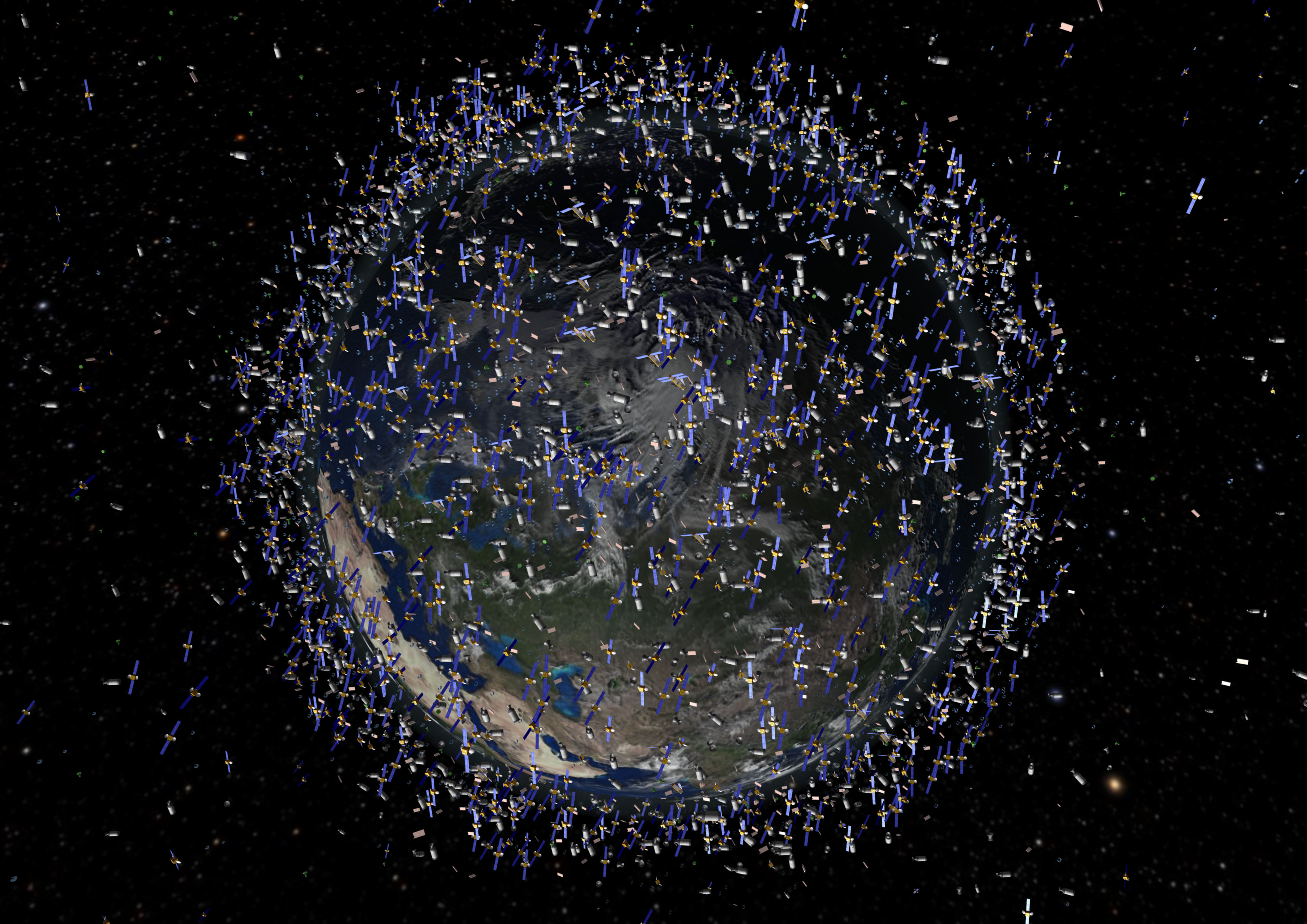
Apart from the many technical aspects of space travel, there is also an
enormous amount of space debris currently surrounding Earth. Much of this junk is man-made, left over from space missions and satellites, as well as collisions. Essentially, we're prohibiting ourselves from being able to go into space in the foreseeable futur
e. The objects currently orbiting our planet range from huge rocket boosters and fuel tanks to minuscule nuts and bolts. The stuff closest to Earth is moving at a whopping 300,000 kilometers per hour, and there is so much of it that it is almost impossible to see through. Further out, the debris is spaced out and moves at about 35,000 kilometers per hour. Still pretty fast, just not as fast as it could be.
 |
| Source: ESA |
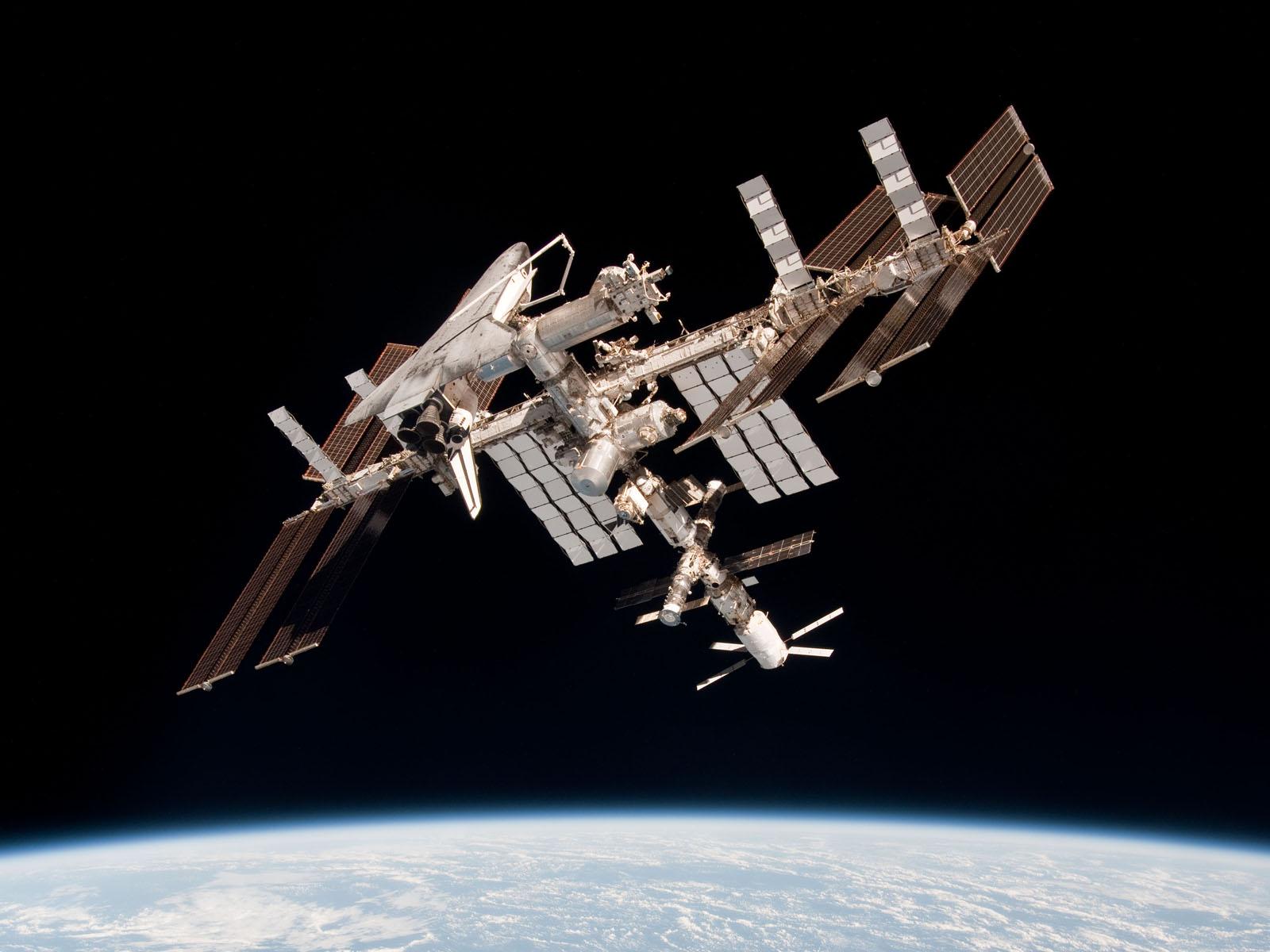
This much debris could wind up causing major damage to currently functioning satellites and spacecraft. On September 28th, a piece was projected to collide with the Suomi NPP satellite, which would have destroyed the satellite in seconds. It was pretty easy to move Suomi out of the way, but these actions are becoming more and more common. Just this past week, on October 27th, the International Space Station was forced to change orbits when it was found to be in danger of colliding with a piece of the Kosmos satellite, which had crashed into Iridum 33 in 2009.
All of this space junk may sound like nothing, as it is well known that we send spaceships up and debris falls back down, just to be burned in the atmosphere. What scientists are afraid of is something called Kessler Syndrome, which is a theory developed by Donald Kessler that essentially states that the more junk there is in space, the more likely it is to collide, and more collisions will lead to even more collisions which will ultimately mean that sending something into space will result in it being destroyed. At this point, we're already seeing the beginning stages of the Kessler Syndrome, and scientists say that it is inevitable.
 |
| Source: NBC News |
Obviously all these issues are kind of putting a damper on things. However, I'm not saying this is the end of your space travel dreams. Private companies have all the time in the world to build rockets that will send people to space. On November 5th, the CEO of Virgin Galactic said they will
resume test flights as early as summer 2015, As for all that space junk, there are already
tons of plans to cleanup all the debris using satellites outfitted with nets or harpoons, or even using gravity to pull the hardware out of orbit.
What do you think about space travel? In light of recent events, would you take a chance and drop $250,000 for a journey to space? You already know my opinion: never in my life will I set foot in a rocket bound for space. Now I want to know how you feel.

No comments:
Post a Comment